My research focuses on self-improving AI agents, particularly how agents can learn, accumulate knowledge, and continuously improve their effectiveness and efficiency over time. Previously, I studied model interpretability.
-
2026
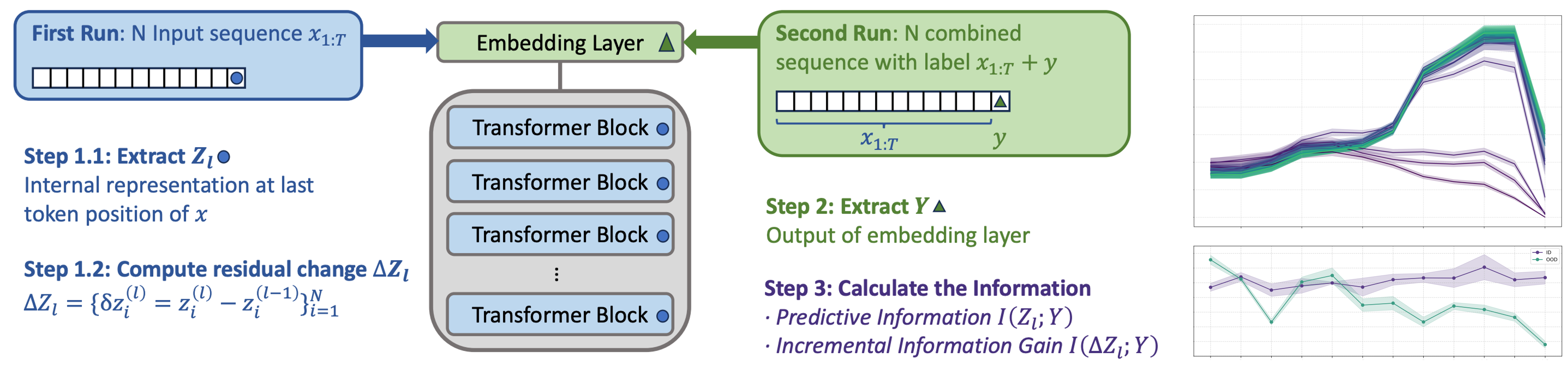
The Generalization Ridge: Information Flow in Natural Language Generation
Ruidi Chang, Chunyuan Deng, Hanjie Chen
Models are not monotonically better with depth. InfoRidge traces predictive information across layers: it peaks in the upper-middle layers, a "ridge" where generalization is strongest, then drops in the final layers. Under distribution shift, models down-weight deep layers and rely more on the intermediate ones.
-
2026
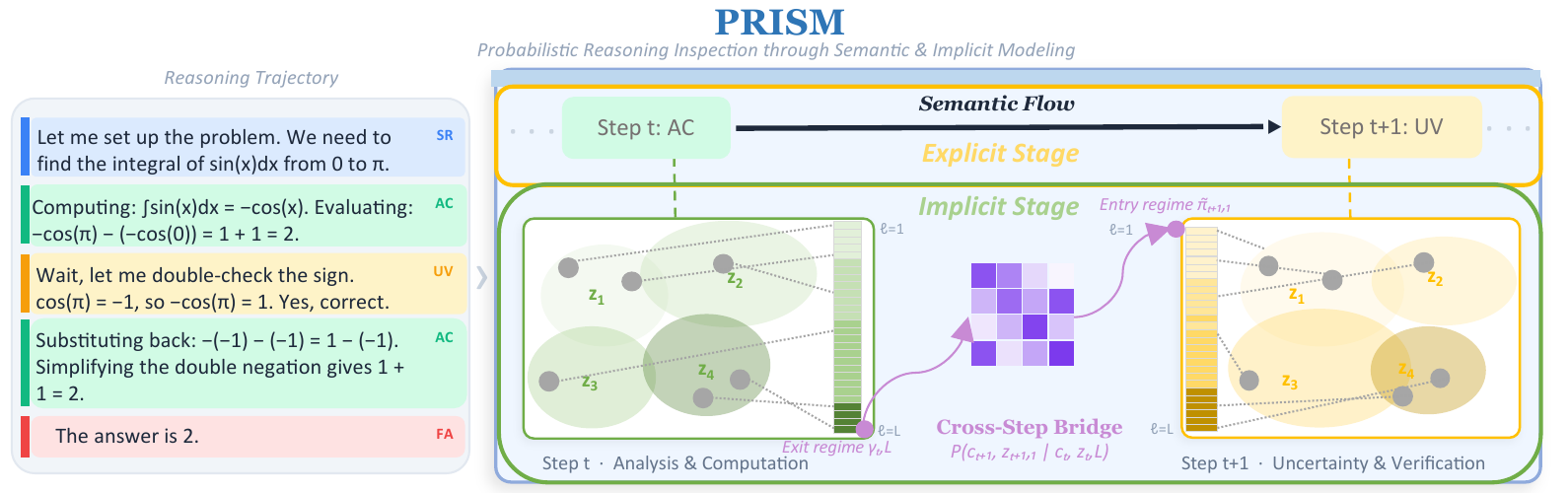
PRISM: A Dual View of LLM Reasoning through Semantic Flow and Latent Computation
Ruidi Chang, Jiawei Zhou, Hanjie Chen
Reasoning traces are usually studied either as text across steps or as hidden states across layers. PRISM models both at once: an explicit stage labels each step's semantic role (setup, computation, verification, answer) and models how roles flow, and an implicit stage finds latent computational regimes inside each step, linked across steps by a bridge matrix. Failed trajectories are more likely to get trapped in unproductive verification loops and split into distinct modes such as overthinking and premature commitment.
-
2025
Steering Information Utility in Key-Value Memory for Language Model Post-Training
Chunyuan Deng, Ruidi Chang, Hanjie Chen
-
2025
Learning Distribution-wise Control in Representation Space for Language Models
Chunyuan Deng, Ruidi Chang, Hanjie Chen
-
2025
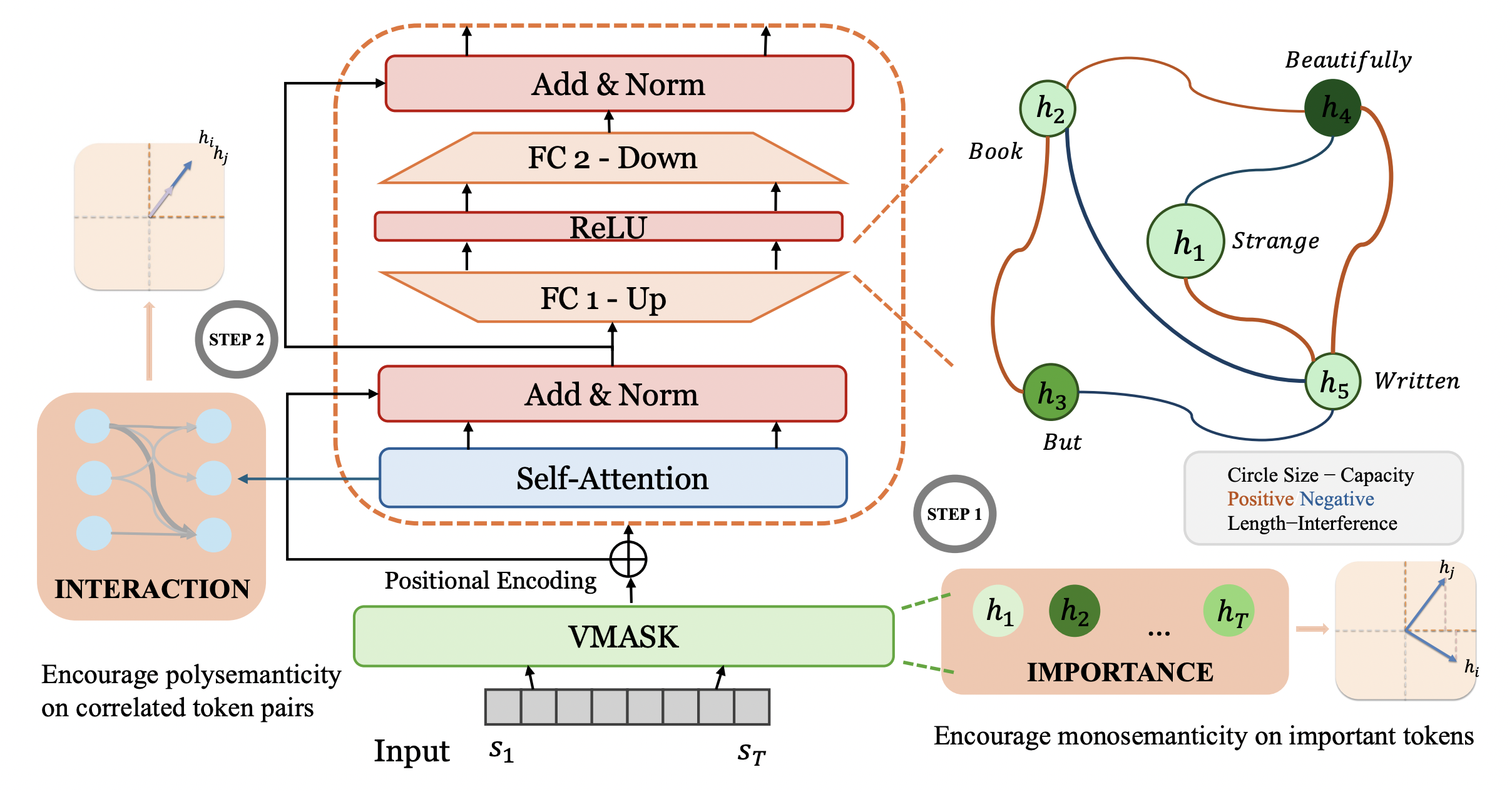
SAFR: Neuron Redistribution for Interpretability
Ruidi Chang, Chunyuan Deng, Hanjie Chen
Neurons often mix many features at once (superposition). SAFR redistributes them: monosemantic for important tokens, polysemantic where interactions matter, which makes the model more interpretable.
-
2026
Language Models are Symbolic Learners in Arithmetic
Chunyuan Deng, Zhiqi Li, Roy Xie, Ruidi Chang, Hanjie Chen
-
2024
Large Language Model Based Multi-Agents: A Survey of Progress and Challenges
Taicheng Guo, Xiuying Chen, Yaqi Wang, Ruidi Chang, Shichao Pei, Nitesh V. Chawla, Olaf Wiest, Xiangliang Zhang
- Reviewer
- ACL ARR 2025 Feb, IEEE BigData 2025, EMNLP BlackboxNLP Workshop 2025, COLM XLLM-Reason-Plan Workshop 2025, COLING 2025
- Volunteer
- EMNLP BlackboxNLP Workshop 2024
- Mentoring
- Nursultan Asilbekov (SURF Program)